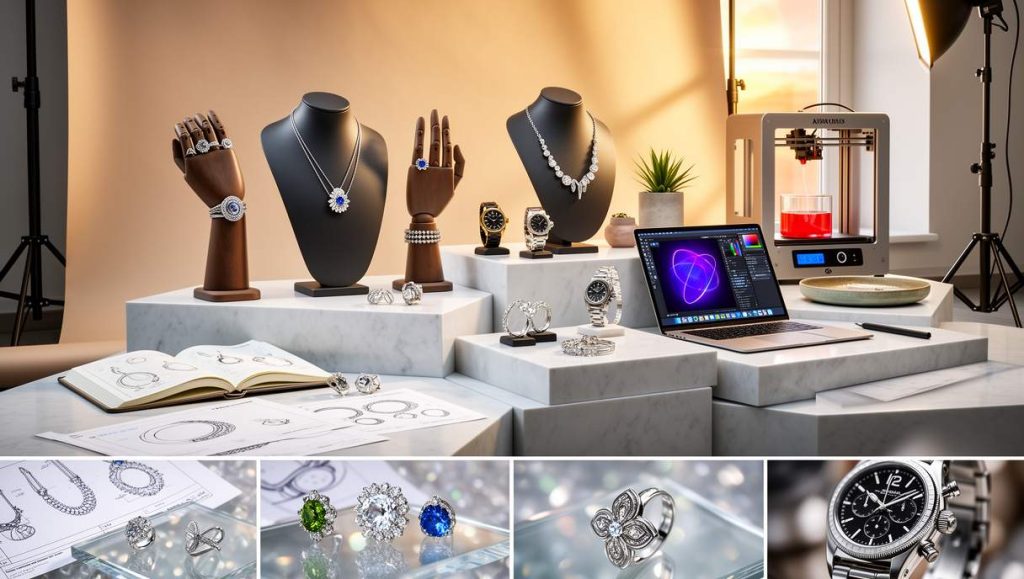
From Workbench to Wow: AI Tools for Artisans Transform Craft into Clicks
Handcrafted excellence deserves visuals that do it justice. Yet many makers spend more time coordinating photoshoots than shaping metal, setting stones, stitching leather, or turning wood. That’s where AI tools for artisans step in. Purpose-built visual production platforms now convert sketches, CAD files, or a simple product snapshot into studio-grade imagery, helping independent jewelers, watch creators, accessory designers, and boutique luxury labels publish faster, launch smarter, and sell more. Instead of juggling lights, lenses, and logistics, a craftsperson can move seamlessly from concept to market-ready assets—without compromising authenticity or detail.
Modern systems understand the nuanced surfaces and finishes that define high-end pieces: the fire of a diamond, the brushed texture of titanium, the gloss of lacquer, the grain in vegetable-tanned leather, and the delicate weave of silk ribbons or straps. With drag-and-drop studios, built-in lighting styles, and smart editing tools, artisans gain a repeatable pipeline for packshots, lifestyle scenes, and even on-model views—ready for e-commerce, social campaigns, and print. The result is a nimble digital workshop where creative intent meets production efficiency, and where every curve, clasp, and facet can shine with exceptional clarity.
Design Faster Without Losing Craft: From Sketch and CAD to Studio-Ready Visuals
The biggest time sink for many makers is not the bench—it’s the back-and-forth between prototyping and presentation. AI tools for artisans compress that loop by turning initial ideas into photorealistic images quickly, so you can validate form, finish, and market appeal before committing to full production. Upload a hand sketch to explore silhouettes and proportions, or import a CAD model to preview render-accurate metals, stones, and surface treatments. Advanced engines simulate materials faithfully: gold warmth, platinum coolness, rhodium brightness, gemstone dispersion, sapphire cabochons, enamel translucency, brushed steel, or PVD coatings all behave as you’d expect in real light.
Because these platforms focus on high-end objects, the controls are built for detail-obsessed creators. You can refine micro-shadows that sculpt bezels and prongs, manage reflections on domed crystals or polished bracelets, and dial in depth of field to accent engraving or guilloché patterns. Need multiple versions? Generate variants of the same piece—yellow, white, and rose gold; pavé vs. channel settings; calfskin vs. alligator straps—without staging three separate shoots. This parallel exploration saves days while protecting the integrity of your creative decisions.
Equally important is the non-destructive workflow. Instead of flattening edits, you can swap materials, adjust bezels, or tweak stone sizes and see updates propagate across all shots and lighting setups. If you collaborate with clients or retail partners, share preview links to gather feedback on finish or fit in minutes. And when it’s time to export, push 2K assets for web and social, then scale up to crisp 4K for print catalogues or showroom displays. By meeting the needs of rapid prototyping and premium presentation in one environment, platforms like AI tools for artisans let makers move faster while guarding the hallmarks of fine craft.
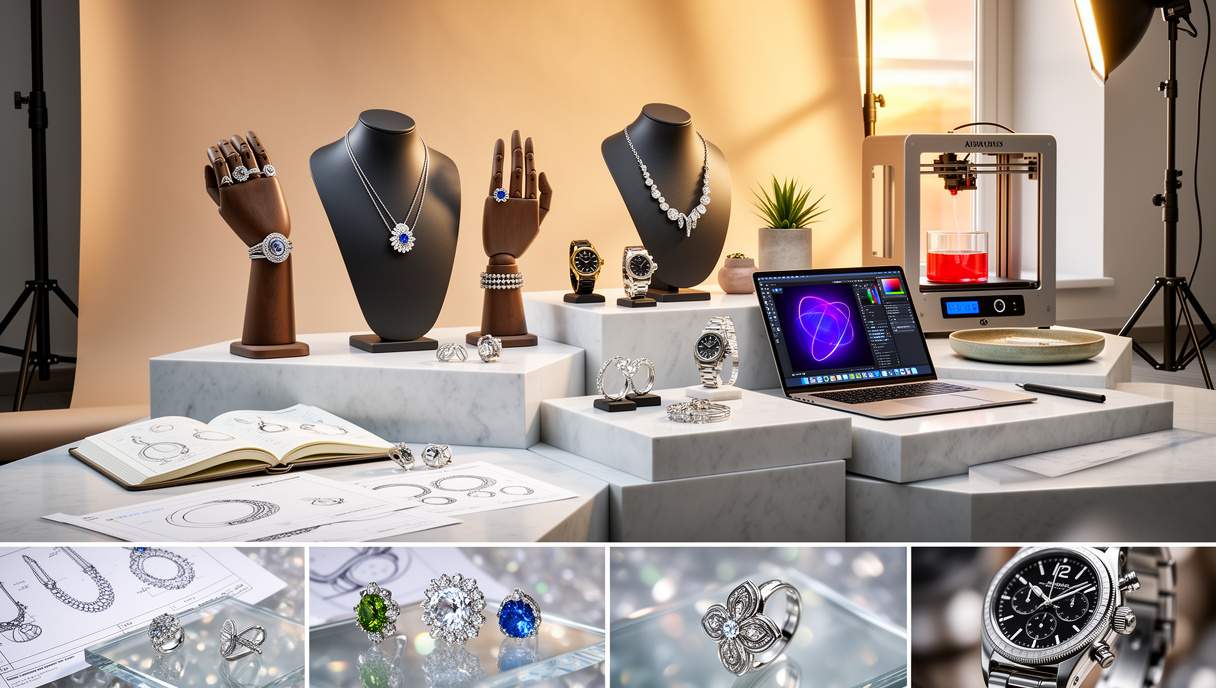
Marketing That Scales: Packshots, Lifestyle Scenes, and On‑Model Imagery in Hours
Great craftsmanship can be overlooked if the visuals aren’t consistent across channels. AI-driven studios fix that by standardizing product photography while giving you on-demand creativity for campaigns. Start with clean, color-true packshots on a white or tonal backdrop that match marketplace guidelines. With prebuilt lighting profiles tailored for metals, stones, ceramics, and leather, you avoid color casts and blown highlights. Shadow and reflection controls add the subtle realism that makes a small object feel tangible on a phone screen.
From there, spin up lifestyle scenes that match your brand’s aesthetic—atelier benches, marble slabs, linen backdrops, or urban-cool environments that hint at the wearer’s world. Because scenes are template-driven, you can maintain a consistent look season-to-season while refreshing props, palettes, and angles. Need to show scale and wearability without coordinating models and sets? On-model imagery becomes a selectable option: swap skin tones, hand poses, or necklines to highlight a pendant’s fall, a ring’s profile, or a watch’s presence on the wrist. This is especially powerful for local markets—think boutiques and craft fairs—where audiences want to see how a piece lives in real contexts without waiting weeks for a photoshoot.
Speed doesn’t mean sacrificing control. You can enforce brand guidelines across touchpoints: keep metals uniform in hue, standardize gemstone saturation, and lock camera distances for a grid that looks polished on product detail pages. This consistency reduces returns by aligning expectations and fosters trust in premium pricing. It also fuels smarter merchandising and A/B testing. Try a darker backdrop for a black ceramic watch to amplify contrast, or a warmer tone behind rose gold to lift perceived vibrancy. Update hero images for social and email in minutes, then analyze engagement without burning budget on reshoots. For artisans expanding from local storefronts to national or global e-commerce, this repeatable visual engine is a growth multiplier.
Practical Playbook: Workflows, Case Examples, and ROI for Small Studios
A streamlined workflow helps solo makers and small teams scale up without hiring a full production crew. Begin by organizing your inputs: sketches, mood boards, CAD exports, and any reference product shots. Import a CAD ring, for example, and assign materials—18K yellow gold for the shank, platinum for the head, and F-G color diamonds with a realistic index. Generate a baseline packshot with a neutral light tent preset to validate polish level and prong symmetry. Duplicate the scene to produce variants: a brushed finish packshot, a black enamel accent version, and a milgrain detail close-up with shallow depth of field. With these in hand, move into lifestyle: place the ring on a travertine tile with soft morning light, then produce an on-model hand shot to demonstrate proportion and finger coverage.
Export web-ready 2K JPEGs for your shop and social, then a 4K TIFF of the hero angle for postcards or lookbooks. The entire cycle—from import to final assets—can fit into a single afternoon once you’ve built a few reusable templates. That predictability is where ROI compounds. Consider a boutique jewelry label that previously spent two weeks coordinating a shoot for a 12-piece capsule. Between studio rental, photographer, retoucher, model, props, and revisions, costs ballooned and launch windows slipped. With an AI-powered pipeline, the same brand now generates consistent packshots and lifestyle sets in days, reserving traditional photography for select flagship pieces. They launch on time, update imagery for restocks instantly, and allocate savings to higher-impact areas like precious materials or store buildouts.
Beyond speed and cost, there are strategic benefits. Reducing physical prototypes cuts waste and shipping, which is especially meaningful when working with delicate stones or international suppliers. Metadata-rich outputs help your digital asset management: standardized file names, aspect ratios, and color profiles reduce errors across marketplaces. Legally and ethically, transparency matters; many artisans pair “handcrafted” descriptors with notes on visual production methods when relevant, ensuring buyers value the craft while understanding that AI assisted with imagery. The point is not to replace artistry; it’s to protect it—letting you focus on setting that last stone or beveling that last edge while your visuals keep pace with modern retail.
Whether operating a small metalsmithing studio, a watch microbrand, a leather atelier, or a mixed-material accessories label, the smartest path is to combine tradition with technology. Embrace AI tools for artisans as an extension of your bench: a reliable, repeatable way to translate the nuance of handmade work into compelling digital experiences. In doing so, you preserve the soul of the craft and give it the reach it deserves—across product pages, social feeds, shop windows, and beyond.

Rosario-raised astrophotographer now stationed in Reykjavík chasing Northern Lights data. Fede’s posts hop from exoplanet discoveries to Argentinian folk guitar breakdowns. He flies drones in gale force winds—insurance forms handy—and translates astronomy jargon into plain Spanish.